
The Engineering Reality: Can Passive Aerogel Insulation Truly Replace Active Water Spray Cooling?
Replacing active water spray systems with passive aerogel insulation is a paradigm shift, but it requires rigorous engineering. This article explores the thermodynamics of tank cooling, explaining how 0.020 W/(m·K) aerogel manages heat flux, blocks solar load, and mitigates CUI to pave the way for practical retrofit solutions.
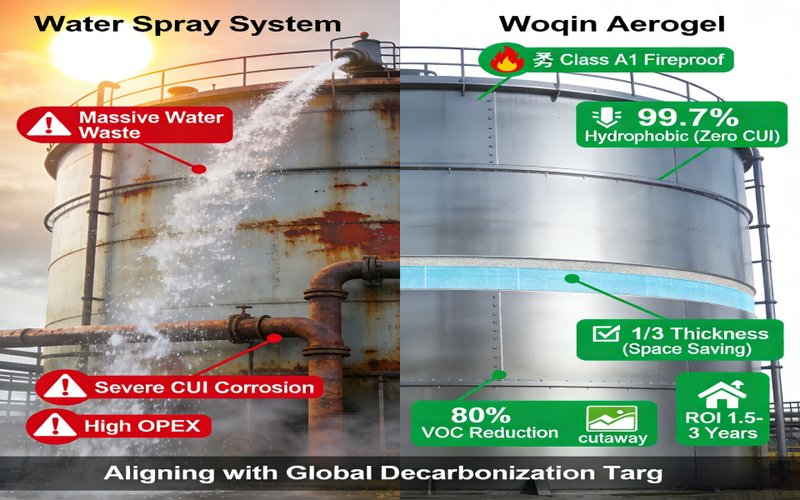
In the industrial sector, a bold narrative is gaining traction: “Turn off your water spray cooling systems and wrap your storage tanks in Aerogel Blankets.” As a manufacturer of advanced insulation, we must address this claim with engineering honesty. Upgrading from active water cooling to passive aerogel insulation is indeed a revolutionary step for OPEX reduction and CUI (Corrosion Under Insulation) prevention. However, you cannot simply swap an active cooling system for passive insulation without understanding the underlying thermodynamics.
Here is the unvarnished engineering reality of how Aerogel Blankets actually manage thermal equilibrium on storage tanks, and why they succeed where traditional materials fail.
1. The Thermodynamics: Active Cooling vs. Passive Blocking
The most dangerous mistake in facility management is confusing "cooling" with "insulation."
- Water Spray (Active Cooling): Uses the latent heat of vaporization to actively remove heat from the tank shell.
- Aerogel Blanket (Passive Insulation): Does not "cool" anything. It dramatically reduces the heat flux (the rate of heat transfer) across the boundary.
Why does passive insulation work for storage tanks?
If a tank has high internal heat generation (e.g., an exothermic reactor), wrapping it in insulation without active cooling would trap the heat and cause a catastrophic meltdown. However, for storage tanks (like LPG, LNG, or light oils), the primary heat load is external solar radiation.
By applying an Aerogel Blanket with an ultra-low thermal conductivity of 0.020 W/(m·K), we effectively create an impenetrable shield. The aerogel drastically slows the ingress of external solar heat, allowing the tank's internal medium to maintain thermal equilibrium safely below its critical vapor pressure.
2. The Nuance of CUI Mitigation (The Truth About Condensation)
Many marketers claim that hydrophobic aerogel "completely eliminates all condensation." This violates the laws of physics. If a temperature gradient exists and crosses the dew point, condensation will occur within the system.
So, how does Aerogel actually solve CUI?
It doesn't stop the physics of condensation; it manages the water phase.
Traditional mineral wool absorbs condensation like a sponge, holding liquid water directly against the steel tank, creating a permanent corrosive poultice.
High-performance Silica Aerogel Blankets are 99.7% hydrophobic but highly vapor-permeable. This means:
- Liquid water (from rain or spray) cannot penetrate the blanket from the outside.
- If micro-condensation occurs internally due to temperature shifts, the aerogel repels the liquid water away from the steel surface, while its vapor permeability allows the moisture to safely vent out as a gas.
This is not magic; it is advanced materials science mitigating the risk of CUI to near zero.
3. Engineering the Retrofit: From Theory to Practice
To successfully decommission a water spray system and transition to Aerogel, a facility cannot rely on guesswork. A rigorous thermal analysis (steady-state and transient) is mandatory to calculate the exact thickness required to block solar loads.
Once the thermal equilibrium is calculated, facilities typically deploy one of two field-proven architectural solutions to bring this theory into reality:
- Solution A (The Heavy-Duty Armor): A full Aerogel Blanket + Metal Jacketing system. This completely replaces the water spray, offering maximum thermal control and CUI defense for critical tanks (e.g., Liquid Ammonia, Spherical Tanks).
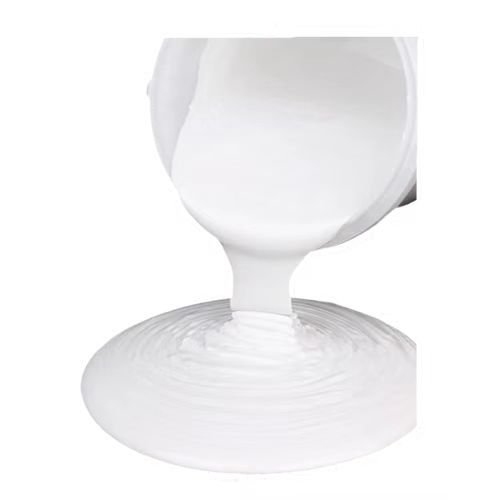
- Solution B (The Lightweight Shield): An Aerogel Coating + Reflective Topcoat system. Designed for older tanks with strict payload limits where thick metal cladding is unfeasible, achieving thermal stability through ultra-thin conductive blocking and radiant reflection.
(Want to dive deeper into the implementation details and ROI of these two solutions? Read our comprehensive breakdown on [How Aerogel Eliminates Water Spray Systems on Storage Tanks] - www.cn-aerogel.com/news/aerogel-replaces-tank-water-cooling-cui-prevention.html)
Conclusion
Replacing water spray systems with Aerogel is not a blind product swap; it is a system-level engineering upgrade. When backed by accurate heat flux calculations and the right deployment strategy (Blanket vs. Coating), Aerogel transforms a vulnerable, water-wasting storage tank into a passively protected, zero-maintenance asset.
🔥 Ready to Decommission Your Water Sprays? Let's Run the Numbers.
Do not guess when it comes to your storage tanks. Contact WOQIN today to request your Free Tank Thermal Equilibrium Calculation.
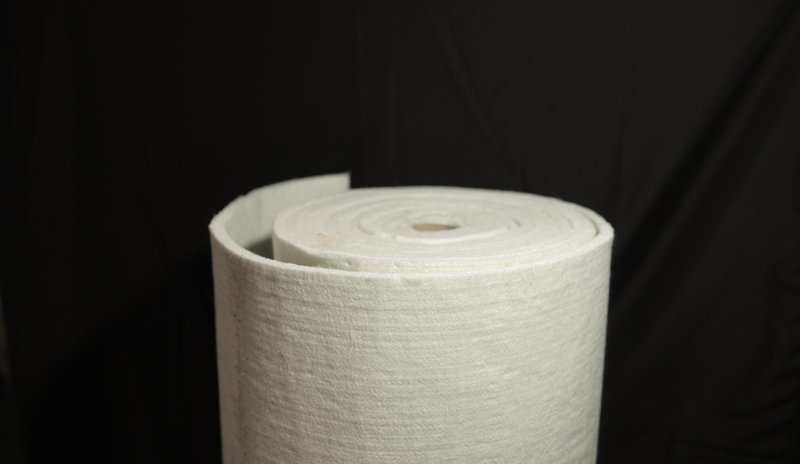
Our thermal engineers will analyze your specific tank dimensions, medium, and local solar loads to provide a precise heat flux model. We will also express-mail a physical Aerogel Blanket Sample directly to your desk so your team can verify the 99.7% hydrophobicity firsthand.
👉 Request Your Free Thermal Calculation & Sample: [an@cn-aerogel.com]
🌐 Explore the Science: https://www.insulatewool.com/

Written by - Ruibin An
Industry Veteran with 13+ Years of Experience. Deeply rooted in the insulation industry for over 13 years, specializing in supply chain optimization and global market trends for Rock Wool and Aerogel materials.
LATEST NEWS
The Engineering Reality: Can Passive Aerogel Insulation Truly Replace Active Water Spray Cooling?
2026-03-18
Conquering the Extremes: Defeating CUI and -162°C LNG Challenges with Aerogel Insulation
2026-03-17
Beyond the 800°C Barrier: A Masterclass in High-Purity Alumina-Silicate Performance
2026-03-16
Stop Guessing with Your Kiln Linings: Why 44 kPa Tensile Strength and Batch Traceability Matter
2026-03-15
The Aerogel Market Trap: Debunking 1000°C Coatings & Fake Alternatives
2026-03-14