
The Aerogel Market Trap: Debunking 1000°C Coatings & Fake Alternatives
As aerogel and VIPs reshape global energy standards, the market is flooded with scientifically impossible claims. From 1000°C coatings to dusting sponges, discover the thermodynamic truth behind the insulation industry's biggest traps, and learn how to distinguish a "grocery store" trader from a true value-added manufacturer.
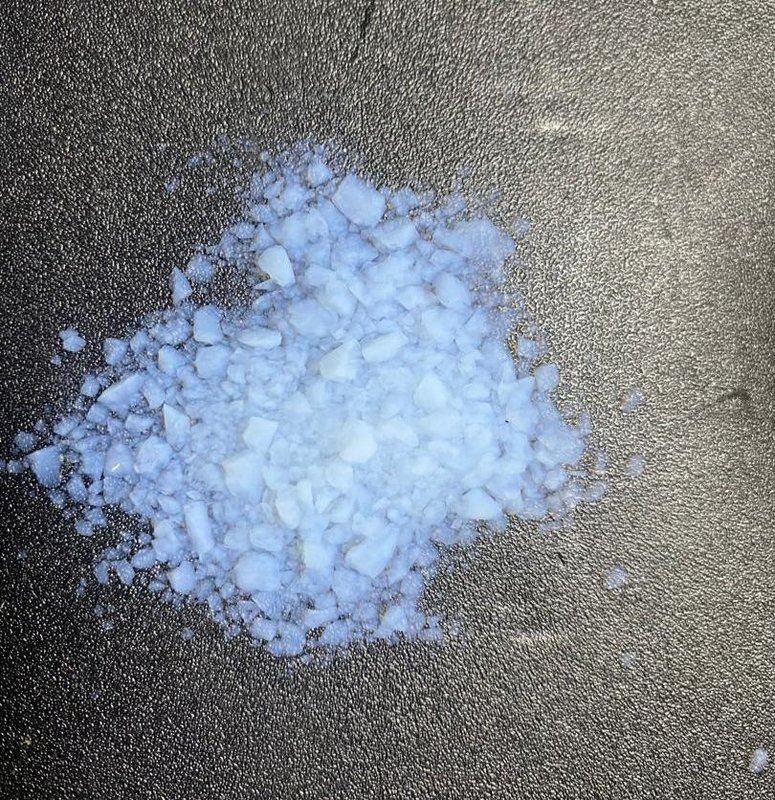
Search engine algorithms might reward keyword-stuffed websites with high rankings, but thermodynamics dictates engineering reality. As aerogel and Vacuum Insulation Panels (VIPs) become the ultimate standards for industrial, marine, and architectural retrofits, the market has been flooded with general trading companies. These suppliers often use scientifically impossible technical data sheets (TDS) to mislead overseas buyers, leading to catastrophic engineering failures and massive rework costs.
At Hebei Woqin, rooted in China's central hub for thermal insulation, we operate as a primary value-added manufacturer and R&D integrator. Today, we are stepping away from marketing jargon to focus purely on molecular-level physics. Here is our breakdown of the four most dangerous aerogel traps on the market, and how to identify a genuine thermal expert.
Trap 1: The 1000°C Aerogel Coating Myth
The Claim: A simple, viscous aerogel slurry or coating that can withstand continuous temperatures up to 1000°C.
The Physics of Sintering: Pure silica aerogel undergoes irreversible sintering at approximately 600°C to 650°C. Under such extreme heat, its mesoporous skeleton collapses entirely, losing all of its ultra-low thermal conductivity properties. Furthermore, organic film-forming binders typically carbonize and burn off around 300°C.
The Truth: Any supplier claiming a 1000°C aerogel "coating" is actually selling you a dense refractory mastic (mud) loaded with cheap ceramic fibers. It is extremely heavy, and once the water evaporates at high temperatures, it suffers from severe shrinkage cracking.
The Engineering Standard: Genuine industrial aerogel coatings (like Woqin’s 0.032 W/m·K system) are precision-engineered for safe-touch applications, thermal breaks, and anti-condensation strictly under 200°C.
Trap 2: The "Aerogel Sponge" Dusting Disaster
The Claim: Flexible aerogel sponges marketed for aerospace, cleanrooms, and low-frequency noise reduction.
The Truth: Behind the fancy packaging, these are typically standard open-cell melamine foams lightly dusted with aerogel powder.
The Hazard: Because there is no strong chemical cross-linking between the silica powder and the foam matrix, these sponges suffer from a catastrophic dusting issue upon any mechanical vibration or thermal expansion. Airborne silica dust entering aerospace instruments or high-tech cleanroom HVAC systems is a deadly safety hazard. For true industrial acoustics, engineers must rely on professional-grade glass wool or acoustic rock wool.
Trap 3: The "Aerogel Film" Engineering Illusion
The Claim: Ultra-thin, flexible aerogel films meant for wrapping heavy-duty industrial pipes.
The Truth: Silica aerogel is inherently brittle; it is physically impossible to form a standalone flexible "film" for industrial wrapping. What is being sold as "aerogel film" is actually an ultra-thin (approx. 0.1mm) PI (Polyimide) or PET sheet designed exclusively for micro-electronics cooling (e.g., smartphones), with a maximum service temperature of around 150°C. Pushing a 150°C micro-electronics consumable to an EPC contractor who needs to insulate a massive, high-temperature pipeline reveals a complete vacuum of professional engineering knowledge.
Trap 4: The "Pyrogel® Alternative" Red Flag
The Claim: A website vaguely boasting their blanket is "similar to Pyrogel XT and Spaceloft."
The Truth: First, utilizing trademarked names belonging to Aspen Aerogels® is a severe intellectual property infringement and a desperate SEO tactic. Second, it exposes a contradictory thermodynamic logic. Pyrogel is specifically designed for high-temp hydrophobicity (>500°C), while Spaceloft is optimized for ambient building envelopes (<200°C). A supplier claiming their single product acts like both simultaneously proves they do not understand the critical boundaries of thermal physics, compression resistance, and temperature thresholds.
The Ultimate Guide: Grocery Store vs. Value-Added Manufacturer
How do you secure your supply chain? Look at their catalog.
The "Grocery Store" Trap: If a supplier's catalog simultaneously offers aerogel, graphene, silicone fiberglass cloth, removable jackets, and mechanical machinery, you are looking at a trading middleman. No single physical factory crosses that many diverse chemical and textile industries. They lack R&D capabilities and laboratory quality control.
The "Dual-Core" Advantage of Hebei Woqin:
We don't pretend to manufacture everything; we engineer the ultimate thermal systems.
- Core Manufacturing & Patent-Pending IP: We are the direct value-added manufacturer and R&D core for advanced Aerogel and VIP solutions. We invest heavily in deep-processing system integration. Currently, our proprietary innovations—such as the "Stepped Interlocking Aerogel Composite Board" and the "Thermal-Break VIP Vacuum Anchoring System"—are officially Patent-Pending with the China National Intellectual Property Administration (CNIPA). You are investing in patented thermodynamics, not just raw materials.
- Transparent OEM Hub Integrator: Real-world engineering requires multi-layer solutions. Rooted in the "Hometown of Thermal Insulation," we don't synthesize basic rock wool or glass wool ourselves. Instead, we provide an expertly curated, transparent OEM supply chain. Every traditional layer we supply is rigorously evaluated under the supervision of our in-house PHI-Certified Passive House Designers, allowing you to seamlessly consolidate high-tech aerogel systems and basic insulation materials into a single, mixed-loaded shipping container.
Stop guessing with your project margins. Engineering requires truth, not marketing illusions. Contact the engineering team at Hebei Woqin today to request independent technical data sheets (TDS) or a customized physical Sample Box for your lab's evaluation.

Written by - Ruibin An
Industry Veteran with 13+ Years of Experience. Deeply rooted in the insulation industry for over 13 years, specializing in supply chain optimization and global market trends for Rock Wool and Aerogel materials.
LATEST NEWS
The Aerogel Market Trap: Debunking 1000°C Coatings & Fake Alternatives
2026-03-14
Stop Single-Layer Failures: How 1260°C Ceramic + Aerogel Composites Halve Insulation Thickness
2026-03-14
Needle-Punched Ceramic Fiber Blankets: Optimizing Density and Slag Content for Extreme Environments
2026-03-13
Stop Vibration Slump in Heavy Machinery: Why 44 kPa Alumina-Silicate Blankets Outlast the Rest
2026-03-12
Furnace Lining Shrinking? End Thermal Short Circuits with -1.5% Shrinkage Ceramic Fiber Blanket
2026-03-10