Industrial Pipe Insulation: A Strategic Selection Framework Based on Thermal Risk & Asset Integrity
Selecting pipe insulation isn't just about matching temperatures; it's about managing asset risks. This guide uses First Principles to evaluate Glass Wool (Acoustic/HVAC), Rock Wool (High-Strength), and Ceramic Fiber (1000C+), transforming insulation from a cost into a strategic asset shield.
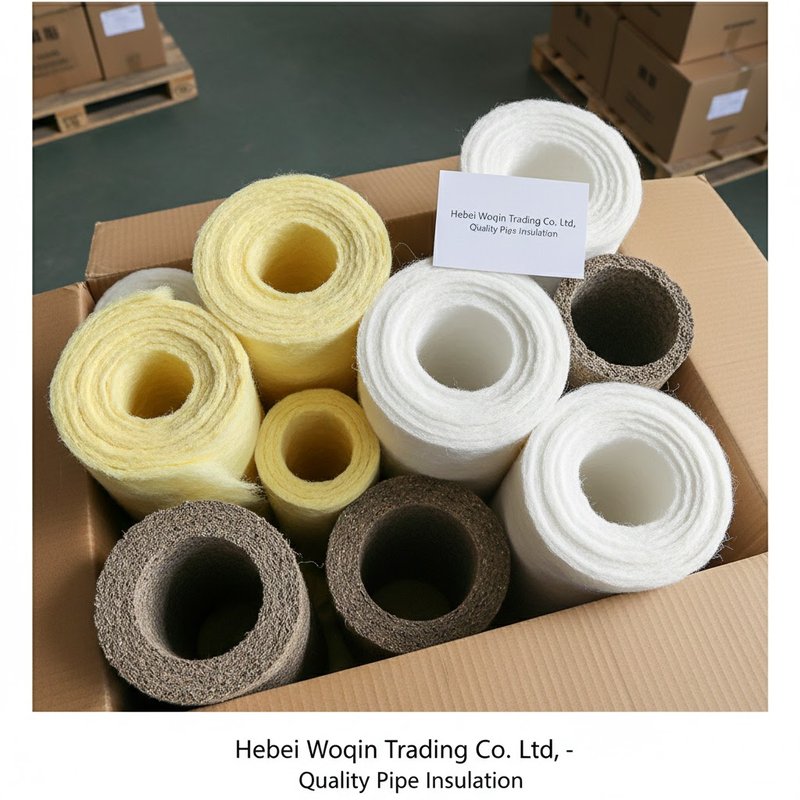
1. First Principles: Why "Temperature Matching" is Not Enough
In engineering, the failure of an insulation system rarely stems from the wrong temperature rating. It stems from a failure to account for Environmental Stress.
Choosing the right material means understanding the difference between a "Temperature Number" and a "Thermal Environment." A pipe isn't just hot; it vibrates, it's stepped on by maintenance crews, and it's attacked by moisture. At Hebei Woqin, we evaluate insulation through a Three-Tier Risk Protection Model.
2. Tier 1: The Operational Efficiency Layer (Glass Wool Shell)
- The Risk: Energy hemorrhage and indoor air pollution.
- The Cost of Failure: Using non-standard products can lead to failing LEED/WELL environmental certifications, requiring expensive retrofits.
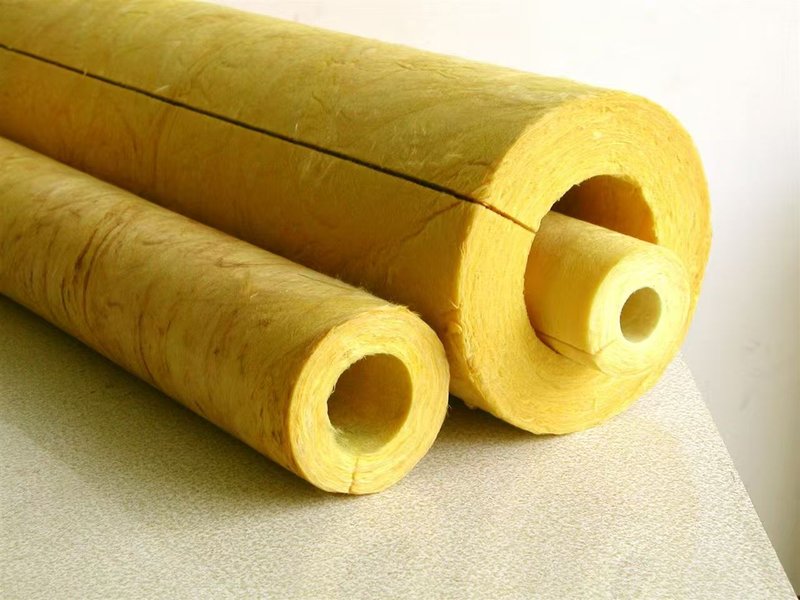
- The Woqin Solution: Utilizing high-purity silica fibers (Avg. diameter less than or equal to 7.0 microns), our glass wool achieves a thermal conductivity of less than or equal to 0.034 W/m.K at 25C.
- The Zero-Formaldehyde Standard: For "Green Building" compliance in hospitals and schools, we provide White Zero-Formaldehyde options. This eliminates chemical off-gassing, ensuring air purity while maintaining a high hydrophobic rate.
- Best For: HVAC systems, chilled water lines, and acoustic dampening.
3. Tier 2: The Risk Mitigation Layer (High-Density Rock Wool)
- The Risk: Physical impact and CUI (Corrosion Under Insulation).
- The Cost of Failure: A single leak caused by CUI hidden under wet wool doesn't just cost a pipe; it involves environmental fines, safety accidents, and weeks of lost production.
- The "Indestructible" Standard: Maintenance crews will step on your pipes. Our Rock Wool Shells (Density 80-150 kg/m3) pass the "Human Weight Test"—supporting a maintenance worker’s full weight without deformation.
- Technical Edge: With a Hot Load Shrinkage Temp of greater than or equal to 600C and an acidity coefficient of greater than or equal to 1.6, we create a rigid, hydrophobic barrier that kills the "sponge effect."
- Best For: Steam pipelines, oil refineries, and power plant infrastructure.
4. Tier 3: The Asset Extreme Layer (Ceramic Fiber Shell)
- The Risk: Thermal collapse and process interruption.
- The Cost of Failure: In a multi-million dollar smelting line, insulation failure means the destruction of the core asset. We are guarding thousands of dollars in hourly output.
- Atomic Stability: Our Ceramic Fiber Shells handle the "Hell-zone." Even after 24 hours at 800C, linear shrinkage is limited to negative 1.5%.
- Thermal Barrier: Even at 500C, the conductivity remains at a manageable 0.134 W/m.K, ensuring critical system components remain within safe operating limits.
- Best For: Industrial kilns, smelting furnaces, and ultra-high-pressure steam systems.
5. Strategic Selection Matrix: Managing Your Risks
| Protection Level | Primary Risk | Max Temp | Unique Engineering Value |
| Operational Efficiency | Energy Loss / Air Pollution | 450C | Zero-Formaldehyde / Acoustic Purity |
| Risk Mitigation | Physical Damage / CUI Corrosion | greater than or equal to 600C | "Indestructible" (High Strength) |
| Asset Extreme | Thermal Collapse / Shutdown | 1000C+ | Ultra-Low Linear Shrinkage |
6. Why Engineers Choose Hebei Woqin: Engineering Certainty
We don't just ship products; we deliver Verified Performance. Hebei Woqin Trading Co., Ltd. (CEO: Ruibin An) bridges the gap between factory capacity and site-specific engineering needs.
- AAA Credit Backing: We provide the financial and logistical reliability required for global infrastructure tenders.
- One-Stop Logistics: Consolidating different grades of insulation into a single, optimized shipment to reduce your landed cost.
Identify your tier. Secure your asset. Contact the Woqin Engineering Team for a "Three-Tier Risk Assessment" of your piping network today.
Written by - Zhongjian An
Certified Passive House Designer (PHI Germany), validated by Prof. Dr. Wolfgang Feist. With 15+ years of expertise in high-performance solutions for both Green Buildings and Industrial Applications (Petrochemical Pipelines, LNG Cryogenic, & High-Temp Equipment).
LATEST NEWS
The Ultimate -40°C Winterization Guide for CIS Industries: 10 Critical Scenarios, One Thermal Standard
2026-04-15
The -40°C Survival Guide for SRU Piping: Preventing Liquid Sulfur Freeze with Pre-formed Shells
2026-04-15
The Industrial Lifeline Across the Frozen Earth: Securing CIS Substations Against Condensation
2026-04-13
Arctic Pump Station Insulation Pillar: GOST Pre-formed Shells for CIS Winterization
2026-04-11
Defeating -40°C "Bottom-Ice": How Pre-Formed Rock Wool Shells Prevent Condensate Line Freezing
2026-04-09