
Stop Paying to Ship Air: How Vacuum-Packed Glass Wool Cuts Freight Costs by 80%
The Red Sea crisis has caused freight rates to surge. For mid-temp projects, shipping bulky rock wool means paying to transport air. Vacuum-packed glass wool compresses by up to 1:6 and fully recovers its 0.034 W/(m·K) performance on-site. Cut your shipping volume by 80% and save massive logistics CAPEX without compromising quality.
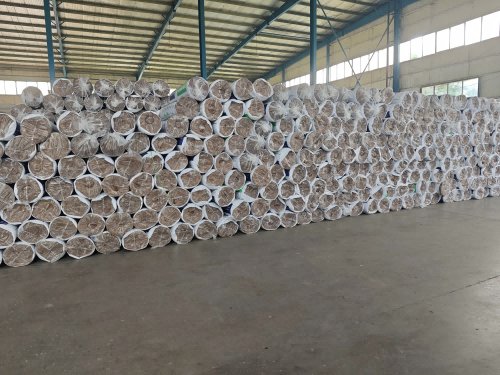
The Mid-Temp Insulation Dilemma in a Shipping Crisis
As the Red Sea crisis continues to disrupt global shipping routes, ocean freight rates have surged, significantly reducing the profit margins of overseas engineering projects.
Not every project involves extreme 500°C+ environments that justify the use of premium aerogel. For mid-to-low temperature applications—such as HVAC ductwork, flexible piping, and steel structure facilities—EPCs typically rely on budget-friendly fibrous insulation like rock wool or glass wool.
However, a critical contradiction has emerged: While these materials are inexpensive at the factory gate, their physical volume is massive. When an EPC spends a few thousand dollars on material but faces a $10,000+ ocean freight bill to transport it, a critical financial challenge emerges: The freight costs more than the cargo itself.
Part 1: The Pain Point — Why Rock Wool is a Logistics Dead-End
To save space, many procurement managers ask their suppliers to "compress" rock wool before shipping. Scientifically, this approach compromises material integrity.
Rock wool is composed of short, brittle fibers with a relatively high slag ball content (often up to 7.00%, vs. glass wool's ≤0.3% under ASTM C612). When subjected to high mechanical pressure, the internal fiber structure permanently fractures and crumbles into powder.
The Structural Consequence: Once the compressed rock wool arrives on-site and the packaging is removed, it cannot rebound. An insulation blanket designed to be 100mm thick might permanently crush down to 60mm. This total loss of structural integrity means the thermal performance fails, leading to immediate rejection during engineering inspections.
Therefore, traditional rock wool must be shipped at its original, bulky volume. You are forced to pay 100% of the "air shipping" premium.
Part 2: The Solution — Glass Wool's Distinct Physical Advantage
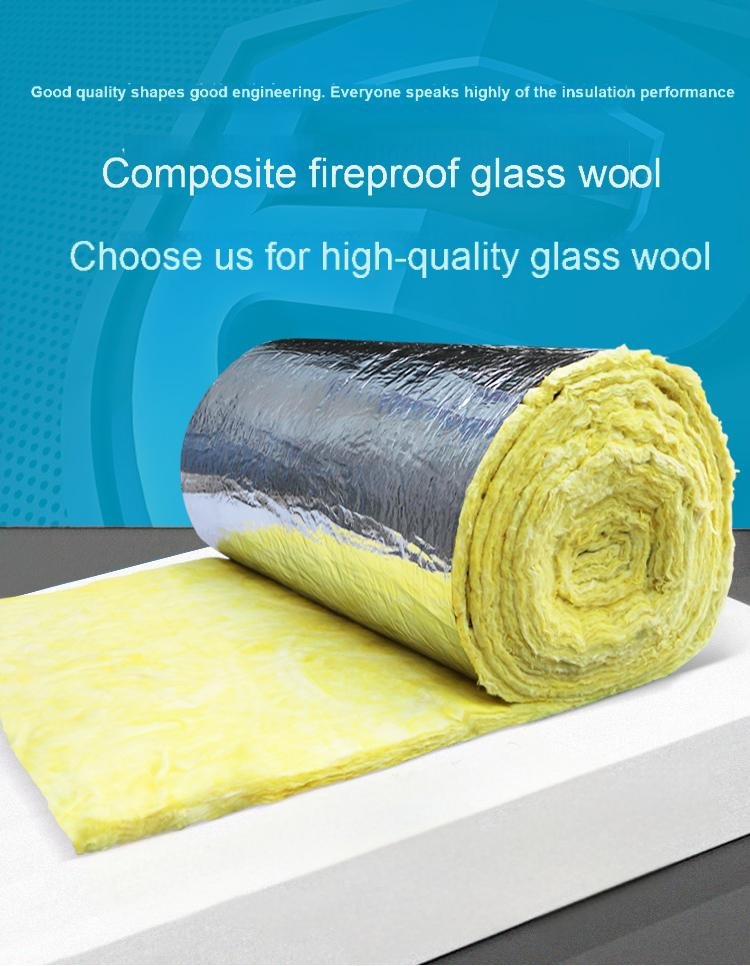
While both are classified as budget-friendly mineral wools, Glass Wool possesses a distinct structural advantage: extreme flexibility and long-fiber resilience. By leveraging this resilience, Hebei Woqin utilizes heavy-duty Vacuum Compression Technology. We place rolls of glass wool into industrial vacuum machines, extracting the internal air and applying immense pressure.
- The Extreme Compression Ratio: Our glass wool can be safely compressed at ratios ranging from 1:4 to 1:6.
- 100% Rebound Guarantee: Upon arriving at the overseas job site, the moment workers cut open the vacuum bag, the glass wool instantly "breathes" in air and rebounds to its exact 100% design thickness.
- Maintained Thermal Excellence: Post-rebound, lab tests confirm it perfectly maintains its thermal conductivity of ≤0.034 W/(m·K) at 25°C, providing uncompromised insulation performance.
Part 3: The ROI Math — Eliminating the Freight Nightmare
Let’s translate this physical resilience into hard financial data using standard modeling for an overseas HVAC/facility project.
- Project Requirement: The volume equivalent of 10 x 40HQ containers of standard insulation.
- Freight Assumption: Current estimated spot rate of $8,000 per 40HQ container.
Competitor Scenario (Standard Rock Wool - Uncompressible):
- Requires shipping exactly 10 containers.
- Freight Expenditure: 10 containers × $8,000 = $80,000
Hebei Woqin Scenario (Vacuum-Packed Glass Wool - 1:5 Compression Ratio):
- Delivering the exact same coverage area and thickness, the vacuum compression condenses the load into just 2 containers.
- Freight Expenditure: 2 containers × $8,000 = $16,000
🔥 Direct Logistics Net Savings: $64,000
By switching to vacuum-packed glass wool, you instantly recover $64,000 in logistics CAPEX—more than enough to purchase your next several batches of insulation materials.
Part 4: The Hidden Balance Sheet — On-Site Construction Advantages
The benefits of vacuum compression extend far beyond ocean freight:
- Optimized Laydown Yard Space: In crowded overseas construction sites, vacuum-packed glass wool occupies only 20% of the footprint required by rock wool. Wrapped in heavy-duty plastic film, it is inherently weatherproof, saving significant warehousing costs.
- High-Altitude Handling Efficiency: A compressed roll of glass wool is highly compact and easy for a single worker to carry (e.g., an 8kg compressed glass wool roll vs. a bulky 20kg standard rock wool roll). It can be effortlessly hoisted onto complex scaffolding before being cut open to expand, dramatically reducing crane hours and installation difficulty.
Conclusion: Stop Paying for "Air"
In today’s era of hyper-inflated ocean freight, selecting glass wool is no longer just a material choice—it is a built-in logistics cost-reduction strategy.
Don't let the shipping crisis erode your project margins.
Ready to optimize your procurement supply chain?

Written by - Ruibin An
Industry Veteran with 13+ Years of Experience. Deeply rooted in the insulation industry for over 13 years, specializing in supply chain optimization and global market trends for Rock Wool and Aerogel materials.
LATEST NEWS
Stop Paying to Ship Air: How Vacuum-Packed Glass Wool Cuts Freight Costs by 80%
2026-03-03
From "Bulky Quilts" to "Industrial Armor": Why Aerogel is the Core of Modern Removable Jackets
2026-03-02
The PFP-CUI Correlation: Why 2026 Asset Integrity Requires a Hybrid Insulation Strategy
2026-03-01
Hebei Woqin's Wired Mineral Wool Mats Officially Achieve GOST-R & Class NG Certifications
2026-02-27
Beyond Traditional Insulation: How Aerogel Coatings Permanently Stop Pipe Condensation and CUI
2026-02-24