
Aerogel Thermal Insulation: Redefining High-Temperature Protection in 2025
Aerogel is no longer just for NASA. From extending firefighter rescue time at 800°C to reducing industrial boiler heat loss, this "solid smoke" is revolutionizing safety. Learn about the performance data, cost trends, and real-world applications of nanoporous insulation.
While Aerogel is often called "solid blue smoke" in labs, for us at the factory level, it is the ultimate thermal barrier. With a porosity of up to 99.8%, a 1cm sheet can block a 1300°C flame so effectively that the back side temperature rises by only 2.8°C per minute.
1. Why Aerogel Outperforms Fiberglass and Rock Wool
The secret lies in the nanostructure. Aerogel inhibits convective heat transfer and blocks conduction through its curved silica skeleton. Its thermal conductivity is as low as 0.018 W/m·K—one-third lower than still air. Key Factory Test: In extreme heat, aerogel reacts 5 times slower than fiberglass. This isn't just a lab miracle; it's why it was used for NASA’s Stardust mission and China’s Tiangong space station.

2. Lifesaving Gear: Firefighting and Rescue
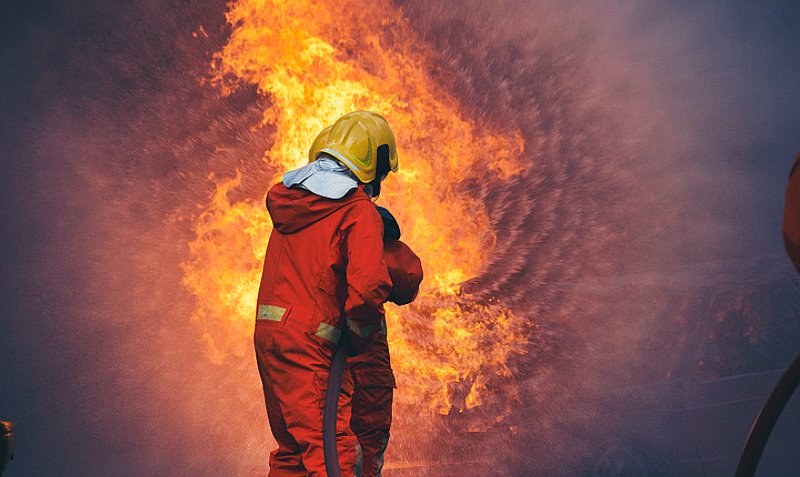
In firefighting, seconds save lives. Standard protective clothing often fails within 8 minutes at 500°C. By adding a 0.6mm aerogel composite layer, we can:
- Extend Protection: Keep inner temperatures below 60°C for 15 minutes at 650°C.
- Record Performance: In 800°C environments, aerogel-reinforced gear has allowed firefighters to work for up to 25 minutes.
- Reduce Fatigue: Aerogel reduces gear weight by at least 23%, a critical factor in the "Golden 90 Seconds" of a rescue.
3. Industrial Safety: From Boilers to Polar Expeditions
Aerogel isn't just for fire scenes. We are seeing it reshape industrial safety:
- Metallurgy & Steel: Reducing protective suit thickness from 8mm to 3mm while cutting thermal burns by 82%.
- Welding & Tools: Improving fingertip sensitivity by 37% in welding gloves.
- Outdoor Performance: Polar exploration suits using aerogel are 40% thinner but provide 60% better insulation than traditional down.
4. Market Trend: Affordable High-Tech Protection
The biggest hurdle was always price. However, with new ambient pressure drying technologies, the cost is dropping. We expect the market price to fall below 200 CNY per square meter by 2025. By 2030, we predict 60% of global firefighting equipment will incorporate some form of aerogel insulation. It is the fusion of materials science and human safety—light as smoke, but strong enough to bear the responsibility of saving lives.
LATEST NEWS
Bridging the Gap in Passive House Construction: Introducing Our High-Strength Graphite Insulation Sub-frames
2026-01-06
Mitigating Thermal Risk in Industrial Infrastructure: The ROI of Aerogel Solutions
2025-12-31
High-Density Glass Wool vs. Mineral Wool: Which is Better for 60-Minute Fire Door Cores?
2025-12-30
How We Realized the Glowing Facade of Shijiazhuang City Exhibition Center: A Translucent Concrete Installation Guide
2025-12-29
Stop Overpaying: How to Cut 30% Off Your Insulation Procurement Without Sacrificing Quality
2025-12-27